Saturday, January 18, 2025

Grand Canyon Day 3


Our third day started with a presentation by Ranger Ash, the chief botanist for the Park.  He provided background about the work they do at the nursery to cultivate plantings and then place them in the park in critical places.  He also talked about how they try to safeguard plants from the damage of all the human visitors that come through the park each year, education is a piece of this.  There are not many employees that work in the nursery division and they keep very busy.  There are always more projects on their list than they can possibly carry out, so they are happy to get volunteers when they can. 

There are several plants in the park that are endangered.  One is the Century Plant.  It blooms every 18 years, sending up a huge central stalk that is used by the indigenous people for special ceremonies.  There are only 3 places in the park where they are growing and those locations are secret.  One field of plants was near a parking lot and they actually dug up and relocated the parking lot to protect the plants.  Another endangered plant is the Sentry Milky Vetch.  Its a small plant that grows in the soil pockets near the rim of the canyon (within 50').  There are only 4 areas on the north rim and 5 on the south rim.  

Ash shared that the nursery propagates about 11,500 plants annually.  They have an additional 13,000 specimens in their Herbarium.  They cultivate as many cactus as they can to place strategically.  They try to cut back on 'social trails' where people go off the designated trail and create their own damaging paths. 

Before the dams were built up stream, the Colorado River would flood annually, scouring the shorelines and removing many non-native plants that tried to take root on the banks.  Without the annual flooding, this natural way to remove invasive plants is gone and efforts have to be made manually.  The park has gone from approximately 18 invasive species in 1908 to over 200 in 2024 (with 31 being a high priority to remove).  

After we heard from Ash, we did a workshop on "Leave No Trace" and the 7 principles of leaving no trace when enjoying the outdoors.  We even learned hand symbols to help us remember them:
1. Plan Ahead - hold up 1 finger and pretend to be writing out a plan.
2. Travel on durable surfaces (stay on the path) - use 2 fingers to walk across the palm of your other hand.
3. Dispose of waste - use 3 fingers like you are scooping up something (waste) - digging a cat pit.
4. Leave what you find (take only pictures) - use 2 fingers on each hand to make a picture frame
5. Minimize campfires - wave five fingers on one hand like a flickering flame
6. Respect wild life - use 3 fingers on each hand to form moose antlers
7. Be Considerate of others - use five fingers (your hand) to wave to others and 2 fingers on your other hand (peace sign).

The students then got to plan out skits to help teach people about the 7 principles.  They were super creative and a lot of fun to watch!

Here is a student NOT respecting wildlife - chasing down a moose for a selfie with them.
 
These students are demonstrating that a safe distance from wildlife is when you hold up your thumb and can't see the animal.  If you can see the animal around your thumb you are too close and should back up. 

The student in the chair was making wishes by tossing coins into the canyon when an endangered condor came up and ate some of the coins (and died - below). You should leave nothing behind, especially not coins and trash that harm the wildlife.


In the afternoon, we went over to the nursery to help Ash and his staff out.  They showed us there new green house that was really quite a step up from their previous facility.  They had two different rooms for plants that grow at warmer temperatures near the river and those on the top of the rim where the environment is drier and cooler. 
A few of our group got to plant out these pots, but most went outside to work.  
It was a beautiful sunny day!  We got to basically see and help with every aspect of the work at the nursery.
One group scooped mulch chips into sifters to capture the composting materials to use for potting.  (The rest of the chips went back into the pile)
Then members of our group shoveled the wood chips into wheel barrows where it was taken to the paths around the workspace of the nursery, preventing plants from growing up where they were not wanted. 
Some members dumped out old dirt from the pots, sorted them and got them ready for future plantings. You can imagine with 11,500 plantings each year, there were a lot of pots to sort and prep. 
I got to work on a giant stand of willow saplings that they were prepping to go down to Phantom Ranch on the river.  They had been working on a new water line and pumping station and had damaged a lot of the willows in the camp.  There were four 'boxes' of willow plantings that had been growing in tall, narrow pots for the past two years.  We were assigned to prune all the limbs from the trees as high as we could reach (6-7' up).  For those twigs that were as thick as our pinkies, we could place them in a bucket of water to be propagated for the next season.  Ash said that willows grow very quickly and root easily. After pruning them, we had to lift them out of the boxes and trim any roots that were sticking out of the bottom.  Since they had been growing undisturbed for two years (and some a bit longer), many were rooted pretty well into the soil beneath.  We pruned and wrestled with them and then re-stacked them into the boxes.  
You can see how tall some of these saplings were! We asked Ash how they got the trees down to the base of the canyon.  He said helicopter.  They put them all on a palette and then net them below a helicopter.  We had two additional volunteers working with us on pruning.  They were interns from the Nature Conservancy (I think).  Both were trying to get in the hours and experience to be able to get a permanent job in the park service.  This is very competitive and as many volunteer and seasonal hours that you can get, the better your chances of getting a permanent position.  I asked if they were biologists.  One said she was a marine biologist (lol at the Grand Canyon). 

A pile of mulch that other members of the group spread around.  When we first walked around the grounds of the nursery,  it didn't look like much, but the more we worked and learned about what was growing where, the more respect I had for the work being done.  
Some of the cactus to be used to prevent people from creating social trails. 
At the end of the day, our small groups played a family feud-like game about the Leave No Trace principles.  It was pretty funny.  Our group got the card deck that was all about different 'durable' surfaces..."Which surface is more durable: mud or deep snow?  Tree roots or dry grass? Sand or stone?". It was a little counter intuitive.  The surface that leaves the least trace and less damage is the one to pick. 


Grand Canyon Day 2

Our second day began with a delicious breakfast from our chefs and then we dived into learning more about the park service from Brian Drapeaux - Deputy Superintendent of Grand Canyon NP and Louis "Bucky" - Director of Albright Training Center.  Both were amazing storytellers and very generous with their time with us.  They spoke for a while, but then took tons of questions from the group. 
Brian Drapeaux - Deputy Superintendent of Grand Canyon NP.  He opened his talk with the W for WSU but I didn't get a picture, so I asked him to pose with me afterwards. lol. 

Brian told a powerful personal story of his own path into the Park Service that was very thought provoking.  He is a native of the Sioux tribe in SD.  He laughed and said he was 2nd generation Scotish (his mom's mom came from Scotland).  He took on leadership roles from a very early age and was selected as VP of his tribe at age 29.  His first career was in education as a teacher in Juneau Alaska and on his own reservation.  Then he worked in the Bureau of Indian Education in the federal government.  He eventually moved over to the National Parks in the Department of the Interior as the Deputy Superintendent of the Grand Canyon park.  As he tells it, he had never set foot in a National Park.  In fact he scoffed at them and had considerable scorn for them growing up.  They had taken land from his people and were 'white places' that did not consult with or honor indigenous peoples about policies for managing land that had been in their care for centuries.  It was hard for him to make the transition to work for this agency that he did not respect, but he saw an opportunity to do good.  After his first few months, in the NPS he was struggling to find his way and he returned to his reservation to convene a sweat lodge meeting with the men of his tribe.  Through the ceremony they shared their wisdom and he found his purpose at the Park.  He didn't spell it out for us, but it was clearly to be an indigenous voice in a work force that had only 2% indigenous employees managing land that was mostly indigenous.  Finding ways to bring those voices back into the stories that are told about these special places - our National Parks. 

When he was young, his life was filled with violence, fist fights with peers, etc.  He wasn't good at fighting this way, so he decided to fight through knowledge and politics.  He got his bachelors degree and for a time he worked for Senator Tom Daschel and learned a lot about how politics works.  He never wanted to be a politician, but he understands political dynamics that affect us all.  He shared his own leadership wisdom with the group.  The words he repeated several times were "Decide, and take action".   When he first came into the park, it was clear that there was a culture of abuse 'on the river', by guides and others who were down in the canyon.  It was "what happens in the canyon stays in the canyon".  It was clear that this was wrong and needed to be addressed.  He took it on directly and spoke at length about how everyone needs to decide where they will stand when they are confronted with similar abusive situations.  Are you the abuser, the victim, a bystander, someone who will stand up?  What role do you play?  He said he was prepared to stand up and not be afraid of the consequences.  He laughed about the "white discipline" that he witnessed when he left the reservation for work in the federal government.  At one point a supervisor wrote him up for something and he just laughed - all that happened was he got a piece of paper.  On the reservation, he would have gotten beaten up because violence was a way of life.  He didn't care about paper reprimands.  He was not afraid to act with integrity, even if others didn't like it.  He was able to clean things up, and started teaching all employees the RISE principles - Be Respectful, Inclusive, Safe and Engaged in the work place.  He was very clearly a confident leader with a ton of integrity.   He eventually came to love the work and reconciled himself with the challenge of working for the NPS.  He laughed and said he also really liked the moderate Arizona winters (its about 20-30 degrees here all week - quite warm compared to winter in South Dakota).

He shared some about the use of the canyon by native people in the area, including the belief by some of them that their ancestors return to the canyon after death.  Basically the canyon is Heaven for them.  These kinds of stories were powerful reminders that the canyon is more than just a beautiful natural site.  

He wrapped up by talking about funding for the Grand Canyon.  I didn't jot down a ton of notes, but he was quite transparent about the different funding streams.  It broke down to about 20% from congress, 20% from concessions (payments from private vendors who were permitted to operate in the park), 20% from entrance fees, and 40% other (which I think means money that comes from their Foundation - non-profit fund raising).  
This was a fun welcome in the lobby!

The next speaker was Louis aka "Bucky".  He was the director of the Albright training center which operates independently of the GC park.  Its the national training center.  He shared his background, career path and current work as well.  He was Cuban and came to the US as a child in the 1960s after the revolution (he was from the west coast of Cuba).  He lived in NYC growing up, served as a seasonal park ranger in several parks on the east coast (NJ, FL) doing interpretation - storytelling.  He got his BA in History and loves to share geology and history with visitors.  Now he oversees the training facility.  He has lots of non NPS groups (like us) come through, including the FBI, Fish and Wildlife Service, AZ State troopers, etc.  It is a popular location and books out 2 years in advance.  He has visited 312 of the 460 National Park sites.  
After hearing from the two speakers, we did some service around the training center.  Part of the group cleaned up the woodpiles outside for the bonfire area.  Inside we re-stocked the table caddies with pens, markers, sticky notes, etc. We also vacuumed the chairs.  With 41 of us, it didn't take us long to finish these tasks, so we got a little extra free time at the end of the day. 

I decided to spend my free time hiking along the rim. We had walked west on the first day, so I decided to head east from the visitor center.

Beauty at every overlook.

As the sun started to go down, the shadows got longer and deeper. 


Friday, January 17, 2025

Grand Canyon Day 1

We got to stay at the Albright Training Center which provides training for rangers across the entire National Park Service.  They had five buildings with suite-style rooms and a nice industrial kitchen, dining and lounge space.  We had a crew of 3 chefs that we hired locally to come cook for us for the week.  When we stepped off the bus, they had a hot breakfast waiting for us.  It was wonderful after being on the bus for so long!


Dining space.  We had to bring dishes from our rooms each meal and then take them back and wash them ourselves (I'm guessing they didn't have an industrial dishwasher in the kitchen). 

We got to meet Ranger Todd Nelson who is the coordinator for volunteers in the park.  He was with us throughout the week and was wonderful!  He provided the group with background info on the history of the National Park service and told us his story of how he came into the NPS. He had worked in several different parks including Zion and had served as an interpreter in the past (this is the label for 'guide'/storyteller).  

After lunch the group hiked through South Rim village to the rim.  We passed the train station.  It dates to 1910.  The park was first accessible by train rather than road. 

We lined the group up inside the lodge and then walked them out with their eyes closed to get their first view of the canyon.  It's always powerfully moving. 
It was a beautiful afternoon for a first view of the canyon!
The canyon is so big!  It's 1 mile deep, about 18 miles wide at the widest, and has 277 river miles winding through it.  The park covers 1900 square miles and is the largest park in the NPS.  

This is Bright Angel Lodge, completed in 1935 and designed by architect Mary Colter (like many buildings around the south village). It still looks just like the historic picture (above)

The Lookout was built in 1914 and blends in to the cliff face by design.  Viewed from a distance (below).

-Psalm 104:24. so appropriate. 

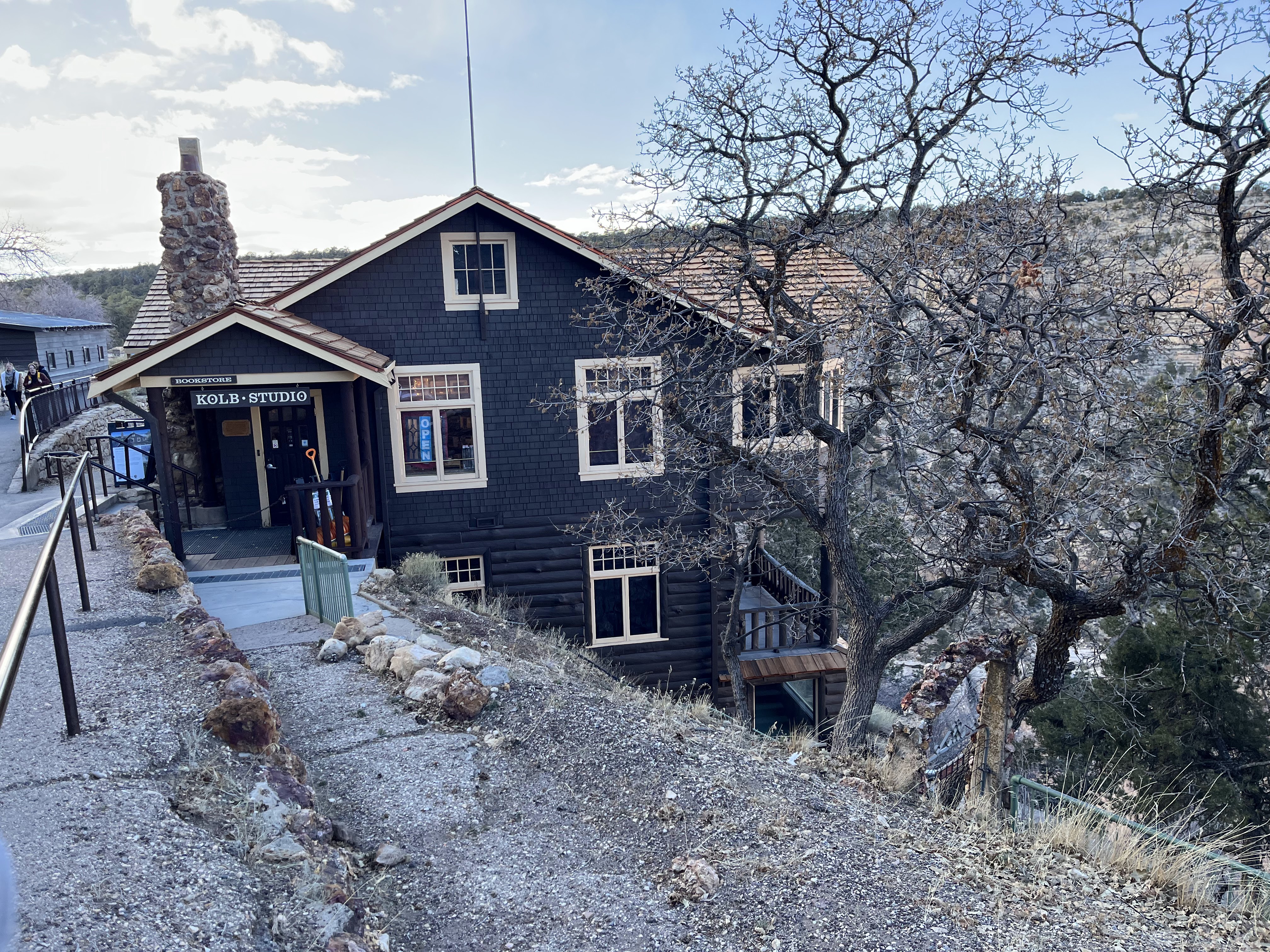
Kolb Studio


Bright Angel Trail


Grand Canyon Travel

I left with 40 other travelers with the WSU Honors College for a week in the Grand Canyon.  This is a service-learning trip built around volunteer work for the National Park Service.  While I was excited about the work and spending this extended time with some of the honors students that I've gotten to know in class, I was NOT excited about the 18 hour charter bus ride to get us there.  We left around 3:00 pm on a snowy, chilly day. 

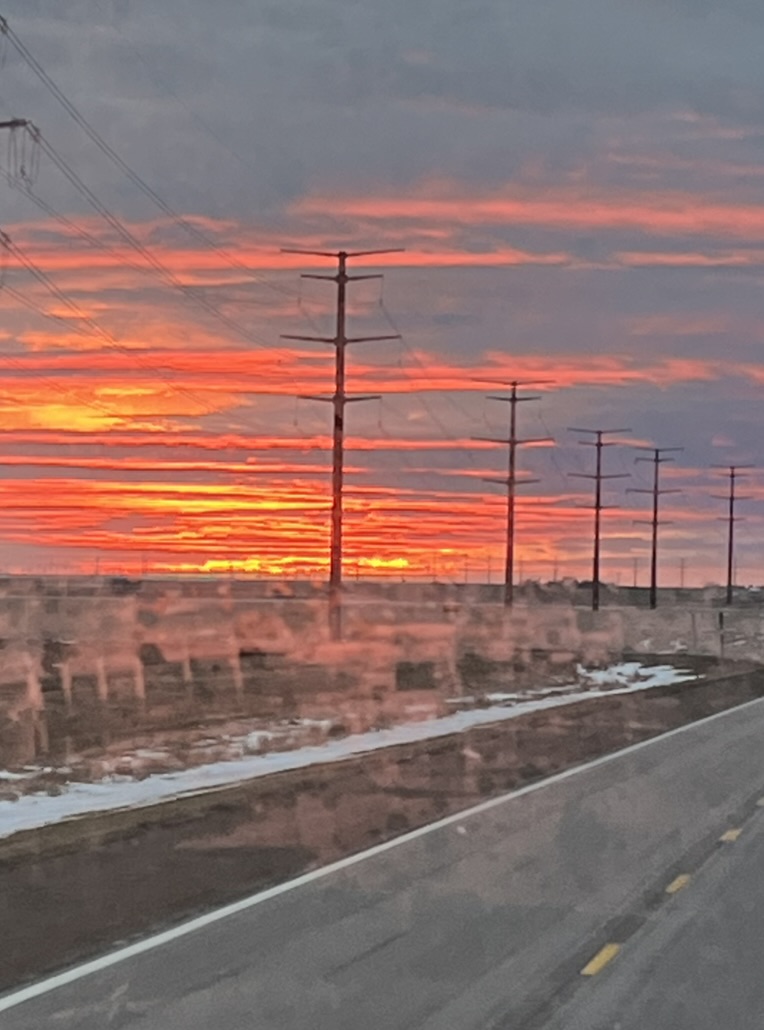
Sunset over western Kansas. 


We had a late dinner around 8:00 pm in Tucumcari NM and everyone settled in to try to get some rest.  We changed out drivers and made several stops for the driver through the night.  The next morning at sunrise we were approaching the park's south entrance.  Sunrise was pretty to watch.


Ready for fun in the Canyon!


Wednesday, December 18, 2024

Random Observations

Whenever I travel, I like to jot down notes about small, everyday things that are different.  These just kind of accumulate in my notes until I can capture them on my blog.   

  • I knew I did not remember much Spanish, but I was proud of myself for remembering "nice to meet you" and I used this phrase several times in the first days, always will a mildly puzzled response.  I didn't think my accent was weird enough to make this awkward, but then I suddenly realized I was using the wrong phrase - I was saying "me gusto"  (I like it) not "mucho gusto"!  I felt slightly ridiculous at that point. 
  • Men and women greet each other with cheek 'kisses'.  This is right cheek to right cheek (always go right) and two smacks of the lips (kissing sounds, not actual kisses).  I got so used to this that it felt a little weird in church when I returned to just shake hands or give a hug instead.
  • Rather than kisses, Men tend to greet other men with a 'hand grasp'.  Not a hand shake, not a slap, but a clasp (but without a chest bump). 
  • At one point I asked about TV broadcasting.   I had seen several old aerials and wondered what viewing was available.  Surprisingly all of the TV screens I saw were relatively new flat screens (maybe 36"), not the old tube TVs I was expecting.  I was told that there was not an aerial broadcast and not cable.  People picked up "packettes" each week with new content (kind of like DVRs or something).  I'm not sure if they were USB thumb drives or what. 
  • Our hosts fed us well.  I had mixed feelings about what I was supposed to be eating.  I don't normally eat huge breakfasts, but they prepared large meals for us.  I don't like to waste food and I didn't want to insult anyone by not eating what was offered, but I think they maxed out what they put out for us and we were probably not expected to eat it all.  I just hope I didn't look like a pig because I ate as much as I did (not wanting to offend). 
  • In our night full of music and dance, at one point our older host (in his late 60's?) started singing misc old pop songs.  One was "Send in the Clowns"(Steven Sondheim from a 1973 musical).  My dad can still play this piece on the piano by memory!  The intersection of different cultures is crazy. 

This kitty came to say hi to me on the first night.  He was a sweetie.  I saw him around the dining room several times, but never caught his name.   The camp also had several dogs, but they didn't seem to hang out around the visitors much.  I was told they were friendly, but at night they were definitely on guard dog status and would let the staff know if anything was happening on the premises.  We did him them barking up a storm one night, but I don't know what they were excited by.  One lady remarked that mutts looked the same all around the world.  She called them 'perro del mundo' - dog of the world.  For the rest of the trip when I saw a mutt trotting around town I couldn't help but label it 'perro del mundo'.  She's right.  They tend to have a pretty similar look. 

One dog that didn't look like others that I saw belonged to one of the pastors.  It was a hairless Chihuahua and he was pretty ugly.  Darcy said he was so ugly that he was cute, but I'm not sure about that.  He was spoiled rotten and was quite sweet. 

I noticed that quite a few fences were constructed with live trees planted pretty close to each other.  In between the live trunks were just branches supporting the horizontal barbed wire (similar to ranches back home). 

A decorative patio lamp at the camp.  
Re-used glass bottles of various types were used as lanterns or wind chimes. 

Time lapse driving through Remedios.